Lawn care
Planning a Custom Tree Care Project: Questions to Ask
The right questions upfront save a made-to-measure tree care project from costly rework. Here's what to ask before signing anything.
By Bartlett Tree Experts5 min readUpdated 1 October 2026
A made-to-measure tree care project is a plan built around your specific site: soil, canopy, species mix, drainage, sightlines and how you actually use the yard. Before signing, ask about diagnosis method, credentials of the crew, what happens if a tree fails inspection mid-project, and how the schedule flexes around weather. Those four questions separate a real plan from a template.
What should we ask before any measuring begins?
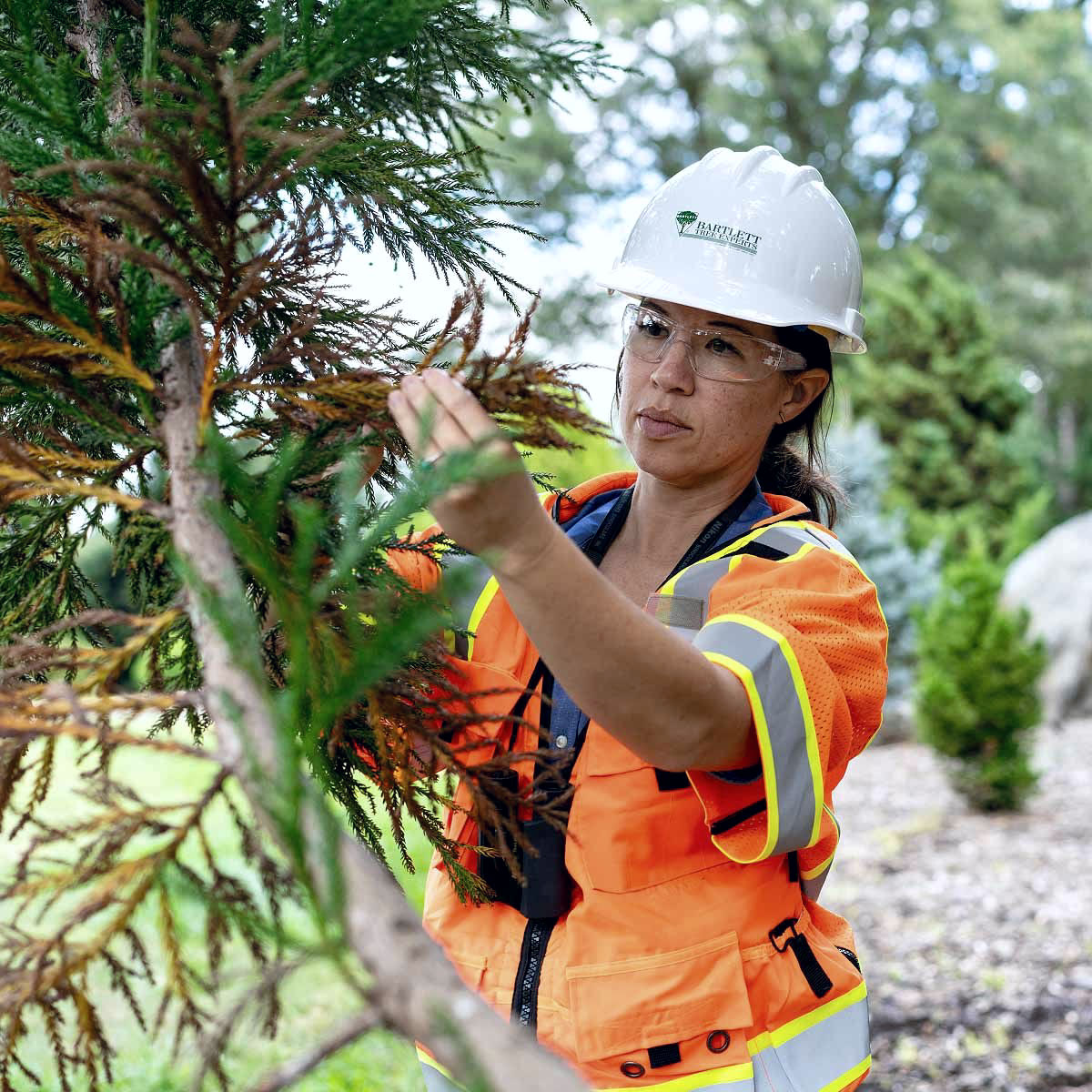
Start with the diagnosis, not the price list. A good arborist walks the property before quoting anything, looks at root flare, checks for included bark, taps trunks and pulls a soil sample if the health picture isn't obvious. At Bartlett Tree Experts, our ISA certified arborists tend to spend more time on that first walk than clients expect. That's the point.
Most people ask first about price. That's the wrong first question. Ask about the failure rate of the proposed approach on trees like yours, and ask what the arborist would do differently on a neighbouring lot with different soil. If the answer is the same for every property, walk away.
A quick scenario. A homeowner calls in worried about a leaning oak near the driveway. The visible lean looks alarming. The tests point lower, to root plate movement on the uphill side, and that changes the whole plan from crown reduction to root-zone investigation and possibly a cabling system. Same tree, completely different scope.
For a fuller pre-visit checklist, see our guide on how to prepare for the measurement visit.
How do we know the plan actually fits our property?
A tailored plan reads your site back to you. It names your species, calls out the specific defects found, references your soil type, and matches treatment windows to your local growing season [1]. If the proposal could be printed for any address in the county, it isn't made-to-measure.
Ask these seven questions before you sign:
- Which specific trees on my property are you treating, and which are you leaving alone and why?
- What diagnostic evidence supports each recommendation you're making?
- Who on your crew will be on site, and are they certified arborists or certified tree workers?
- How will the plan change if we hit drought, hard freeze, or storm damage mid-project?
- What does cleanup include, and where does the debris go?
- What's the follow-up schedule, and is monitoring priced separately?
- What happens if a treated tree declines within the warranty window you offer?
If any answer is vague, push. Vague answers now become disputes later. Our team at Bartlett Tree Experts writes each of these into the scope document before work starts, because a written scope protects both sides.
Which type of project fits our situation?
Not every yard needs the full custom treatment. Here's how the common approaches compare:
| Approach | Best for | Typical timeline | When it's the wrong choice |
|---|---|---|---|
| Single-visit pruning | Healthy mature trees, cosmetic shaping | One day | Signs of disease, decay, or structural failure |
| Seasonal care plan | Mixed-age landscapes with ongoing needs | Rolling, year-round | One-off storm cleanup |
| Made-to-measure project | Complex sites, heritage trees, new plantings | Weeks to months | Simple, uniform properties with one species |
| Emergency response | Storm damage, hazard trees | Same day to 72 hours | Non-urgent aesthetic work |
Want to see how the full custom process runs from first walk to last cleanup? Read how a made-to-measure project runs.
Why does credentials talk matter so much here?
Because tree work goes wrong quietly. A bad prune shows up two seasons later as decay. Wrong-season treatment lets a pest cycle through. The International Society of Arboriculture publishes standards precisely because so much of the damage isn't visible on the day it's done [2].
Try this: ask the arborist to point at one tree and explain, out loud, what they see. Structure. Canopy density. Any dieback. Root flare visibility. Anyone who's done the work can talk about a tree for three minutes without a script. Anyone who can't, shouldn't be writing your plan.
FAQ
How long should the planning phase take?
For a made-to-measure project, expect the planning phase to run longer than a routine quote. A proper site walk, soil sampling if needed, and a written scope document typically take a couple of weeks between first visit and signed plan. Rushing this phase is the single most common reason projects go sideways.
Can we get more than one opinion?
Yes, and you should on anything structural. Two certified arborists looking at the same tree may disagree on treatment, and that disagreement is useful information. Ask each to explain their reasoning. The one who can defend the plan against a peer opinion is usually the one to hire.
What if we only care about one tree?
That's fine, and it's often how larger projects start. A single-tree assessment tells you whether the problem is isolated or symptomatic of something site-wide, like soil compaction or drainage. Bartlett Tree Experts handles single-tree evaluations the same way we handle full-property plans: diagnosis first.
Do we need to be home during the work?
Not usually, once the plan is signed and access is arranged. You do need to be present for the initial walk and the final walkthrough. Those two conversations shape the whole job. Everything in between is execution, and a good crew documents it with photos.